Most cigar smokers can name the towns that matter in Nicaragua, Honduras, and Cuba. Fewer can name the one that matters in Mexico: San Andrés Tuxtla, a volcanic valley in the southern lowlands of Veracruz, where tobacco has been cultivated since before the Spanish arrived. The leaf grown here, known as San Andrés Negro, is one of the most distinctive wrappers in the cigar world, and it is the foundation of every Cházaro cigar produced at the Real Fábrica de Tabacos.
This is the story of that leaf, the land that grows it, and the process that turns it into something worth smoking.
What Is San Andrés Negro Tobacco?
San Andrés Negro is a dark, oily wrapper leaf native to the San Andrés Tuxtla valley in the state of Veracruz, Mexico. The valley sits at roughly 300 metres above sea level, ringed by dormant volcanoes whose historical eruptions deposited layers of mineral-rich volcanic soil. That soil, combined with the region's consistent humidity and cloud cover, produces a tobacco leaf with a natural sweetness and low nicotine content that is difficult to replicate anywhere else.
The "Negro" in the name refers to the leaf's colour after curing: a deep, near-black shade that distinguishes it from the lighter Connecticut-seed or Habano wrappers commonly used in Cuban and Nicaraguan production. The darkness is not the result of a maduro fermentation process. It is the natural expression of the varietal itself, grown in volcanic soil and sun-cured in the open air of the Tuxtla valley.
San Andrés tobacco has been used by non-Mexican manufacturers for decades, most often as a wrapper on cigars blended in Honduras or the Dominican Republic. But the purest expression of the leaf comes from cigars that use San Andrés tobacco across the entire blend: wrapper, binder, and filler. That is what Cházaro does. Every cigar in the range is a Mexican puro, meaning every leaf in the cigar was grown, harvested, and processed in Mexico.
Where San Andrés Tobacco Is Grown
The San Andrés Tuxtla valley occupies a stretch of lowland Veracruz between the Sierra de los Tuxtlas and the Gulf of Mexico. The volcanic geography creates a microclimate that tobacco farmers in the region have relied on for generations: warm days, cool nights, frequent rainfall, and a persistent cloud cover that filters direct sunlight. The effect on the leaf is a thinner, more elastic wrapper with a natural oil sheen that comes from slower, shade-like growth without the need for artificial shade structures.
The soil is the key variable. Volcanic ash deposits from the San Martín and Santa Marta volcanoes have created a growing medium unusually high in potassium and phosphorus, two minerals that contribute directly to leaf combustion and flavour development. Tobacco grown in these soils burns evenly, produces a firm white ash, and carries flavour notes that lean toward cocoa, dried fruit, and roasted coffee rather than the peppery, leathery profile typical of Nicaraguan or Honduran filler.
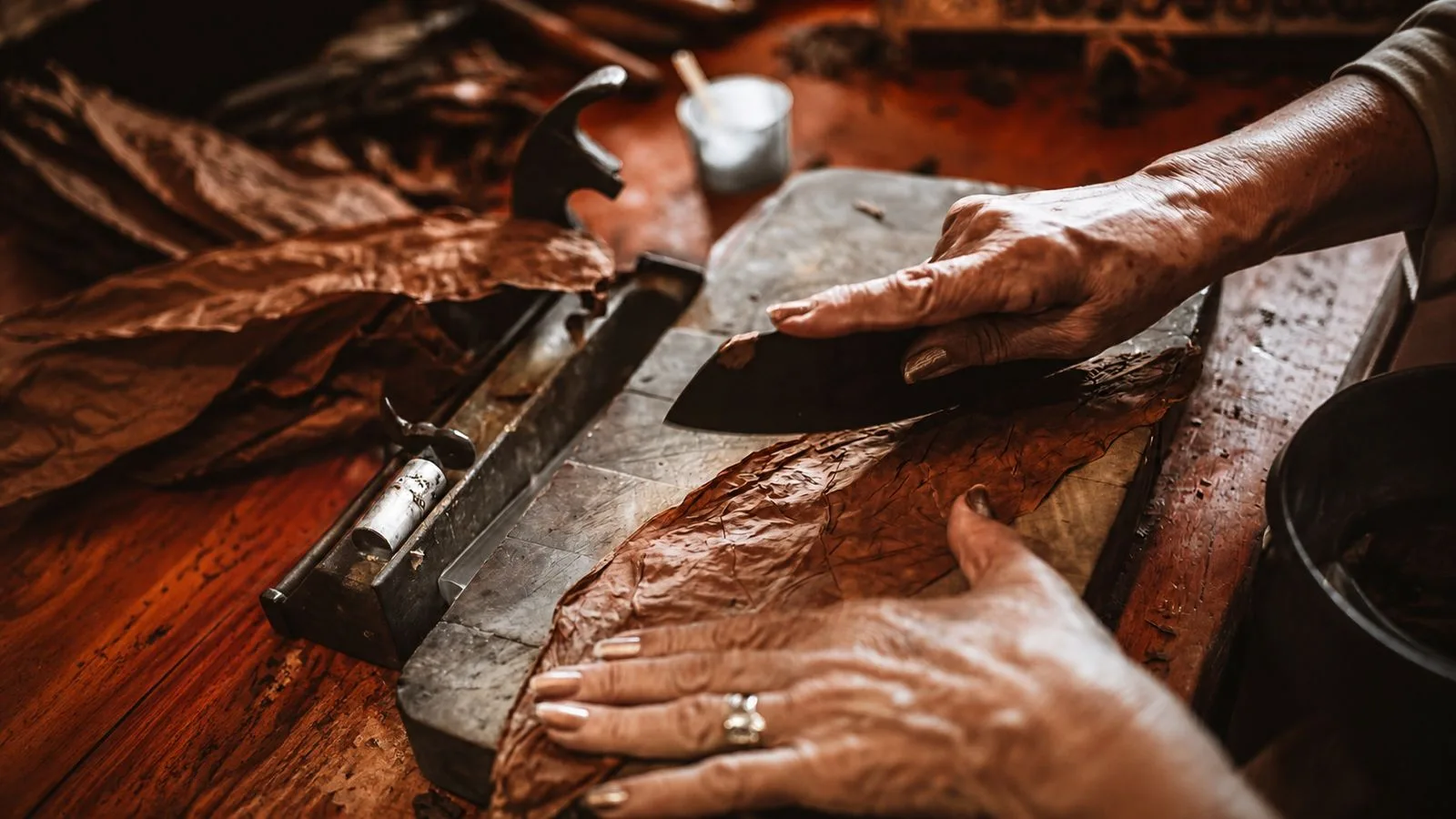
The town of San Andrés Tuxtla itself has been a centre of Mexican cigar production since the colonial period. Several small factories still operate within the municipality, though the number has declined as industrial cigarette production and agricultural diversification have drawn labour away from hand-rolled cigar manufacturing. The farms that remain tend to be small, family-managed operations that prioritise leaf quality over volume.
Cyclical Tobacco Harvesting: The Cházaro Method
Most commercial tobacco operations harvest on a fixed annual cycle: plant in the spring, harvest in the autumn, cure through the winter, and deliver to the factory by the following year. The timeline is dictated by scale. Large manufacturers need volume on a predictable schedule, which means the harvest window is compressed and the curing process is accelerated.
Cházaro operates differently. The family's approach to harvesting is cyclical rather than seasonal, meaning tobacco is planted and harvested in rotating intervals across multiple small plots rather than as a single annual crop. This method, sometimes called "rotational planting," allows each plot to rest and regenerate between cycles, which keeps the soil from being depleted by consecutive tobacco crops.
The practical result is a smaller total yield per year. The quality result is a more consistent leaf. Because the plants are not competing for nutrients in exhausted soil, the leaves develop a more uniform thickness, oil content, and sugar level. For the roller at the factory, this means fewer rejects. For the smoker, it means a more predictable draw and burn from cigar to cigar.
Cyclical harvesting is not unique to Cházaro, but it is uncommon in modern cigar production because it requires more land, more labour, and more patience than a single-cycle operation. It is an economic trade-off that only makes sense if the goal is leaf quality rather than production volume.
The Three-Year Fermentation Process
After harvest, Cházaro's San Andrés Negro leaves enter a fermentation and ageing process that lasts approximately three years before they are delivered to the rolling floor. This timeline is long by industry standards. Most commercial cigar operations complete fermentation in six to eighteen months, and some accelerate the process with temperature-controlled facilities.
Fermentation is the chemical transformation that turns raw cured tobacco into a smokeable leaf. During fermentation, the leaves are stacked in large piles called pilones, where the natural heat generated by microbial activity breaks down proteins, reduces nicotine content, and converts residual sugars into the aromatic compounds that define a cigar's flavour profile. The process requires daily monitoring. If the internal temperature of the pilón exceeds the target range, the stack must be turned by hand to prevent the leaves from overheating and developing bitter, ammonia-like off-notes.
Three years of fermentation does several things that shorter timelines cannot. First, it allows the harshest chemical compounds in the raw leaf to break down completely, producing a smoother smoke with less throat irritation. Second, it gives the more delicate aromatic compounds time to develop. The cocoa, vanilla, and caramel notes that characterise the Black Cházaro line, for example, are not added or sprayed. They are the product of slow fermentation in San Andrés Negro leaf.
Third, and less often discussed, a longer fermentation produces a cigar that burns more slowly. The chemical composition of a three-year leaf is different from that of a one-year leaf. The combustion rate is lower, the ash is firmer, and the smoke output is thicker. For the smoker, this means a longer, cooler, more even burn, which is one of the first things experienced cigar smokers notice when they smoke a Cházaro for the first time.
The Three Cházaro Lines
Every Cházaro cigar uses San Andrés Negro tobacco, but the three lines in the range differ in their blend ratios, strength profiles, and intended experience.
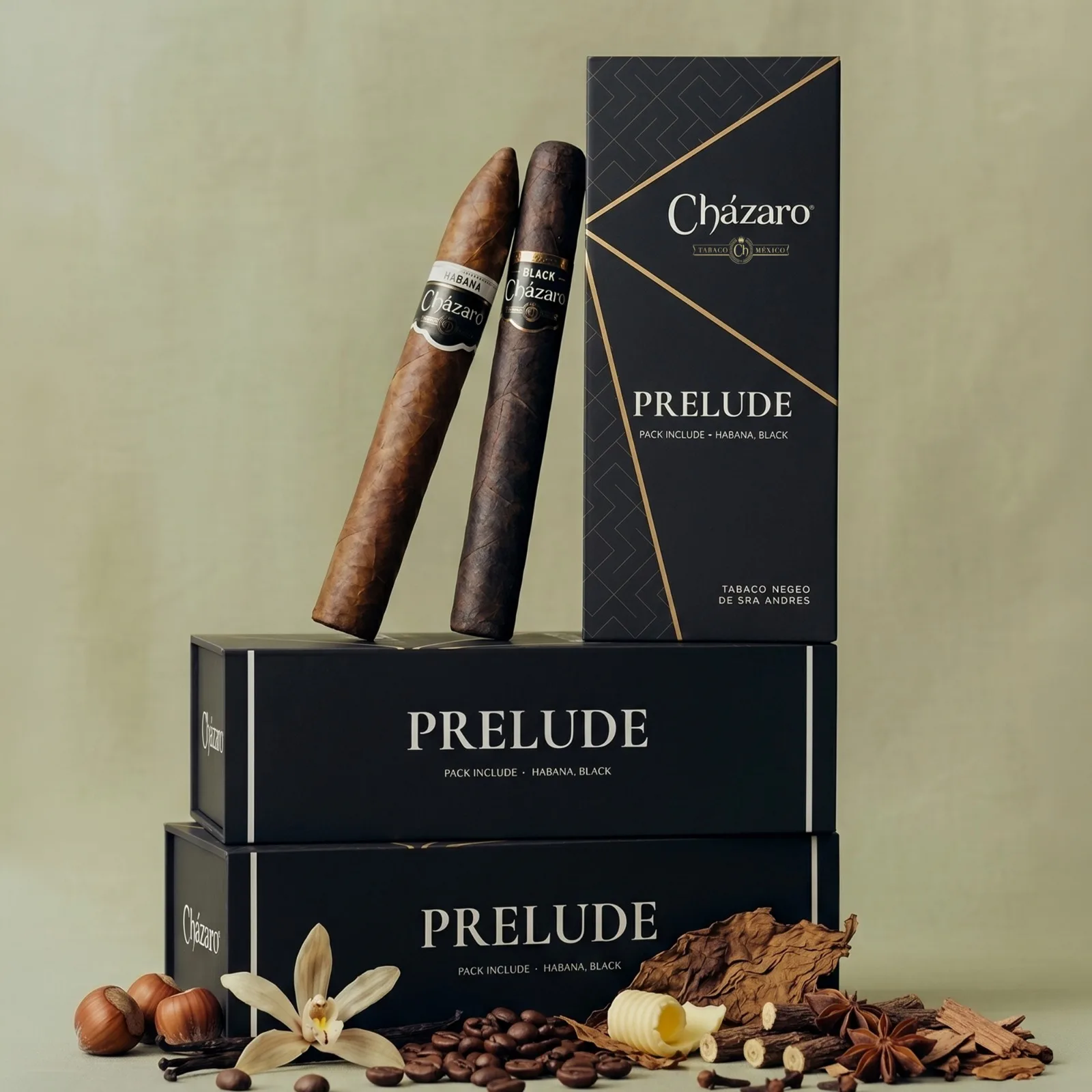
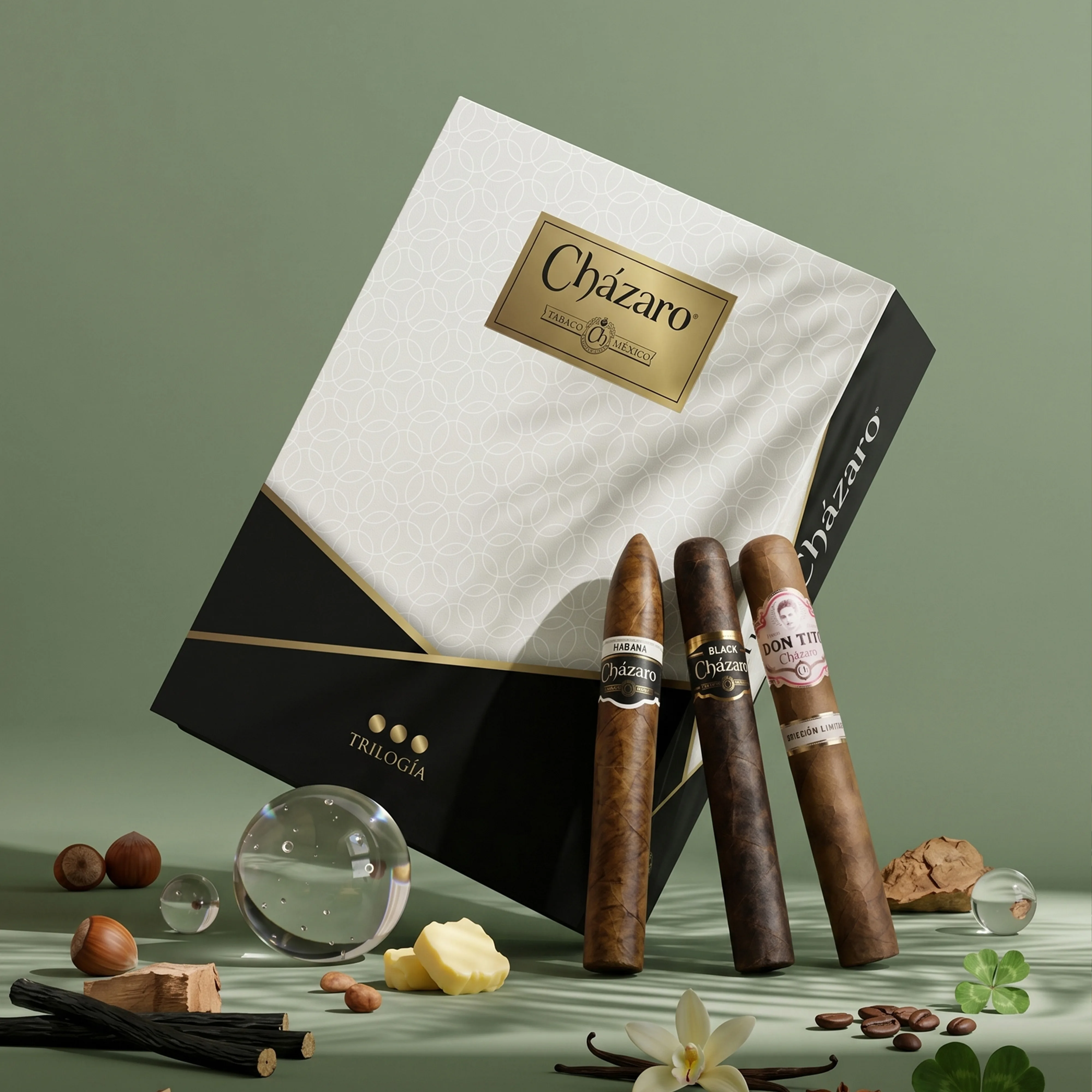
Habana uses a Habana-seed wrapper over San Andrés filler blended at 50% mild and 50% strong tobacco. The result is a medium-bodied cigar with an excellent draw and notes of hazelnut, leather, and aged cedar. It is the fuller smoke in the range, designed for experienced smokers who want complexity without aggression.
Black uses a San Andrés Negro wrapper over a filler blended at 80% mild and 20% strong tobacco. The result is a mild-to-medium cigar with notes of coffee, rum, vanilla, and clove, finishing with caramel and liquorice. It is the cigar most often recommended to new smokers or to anyone transitioning from machine-made cigars to hand-rolled.
Don Tito Edición Limitada is the limited-production line named after the family patriarch. Annual production is restricted, and allocation is managed through the Cházaro private list.
Mexican Cigars and the UAE
The UAE cigar market has historically been dominated by Cuban marques. Cohiba, Montecristo, Partagás, and Romeo y Julieta account for the majority of premium cigar sales through Dubai's established retail channels, and for good reason: the Habanos distribution network is well-established in the Gulf, and Cuban cigars carry an outsized cultural cachet in the region.
Mexican cigars are newer to the UAE market, and the category remains small. That is, in some respects, the point. Cházaro does not compete with Habanos on volume, distribution breadth, or name recognition. It competes on provenance: a single family, a single valley, a single varietal of tobacco, and a three-year fermentation process that most commercial operations would not consider economically viable.
For smokers in Dubai, Abu Dhabi, and the wider UAE who already have a well-stocked Cuban rotation and are looking for something made with a different philosophy, San Andrés Negro is the natural next step. It is not a replacement for a Cohiba Siglo VI. It is something else entirely: a puro from a volcanic valley on the Gulf coast of Mexico, made slowly, in small quantities, by a family that has been in the tobacco trade for over four decades.
Cházaro ships to UAE customers through a private-access programme. The current collection, gift sets, and private tasting enquiries are available at cigarsbychazaro.com.
Frequently Asked Questions
What is San Andrés Negro tobacco? San Andrés Negro is a dark wrapper leaf grown in the volcanic San Andrés Tuxtla valley in Veracruz, Mexico. It is known for its natural oiliness, low nicotine content, and flavour notes of cocoa, dried fruit, and roasted coffee.
Are Cházaro cigars Cuban? No. Cházaro cigars are Mexican puros. Every leaf in the cigar, from wrapper to filler, is grown and harvested in Mexico using San Andrés tobacco from Veracruz.
What does cyclical tobacco harvesting mean? Cyclical harvesting is a rotational planting method in which tobacco is grown across multiple small plots in staggered intervals, rather than as a single annual crop. The practice allows soil to regenerate between cycles and produces a more consistent, higher-quality leaf.
How long are Cházaro cigars fermented? Approximately three years. This extended fermentation breaks down harsh compounds, develops complex aromatics, and produces a cigar that burns more slowly and evenly than shorter-fermented alternatives.
Can I buy Mexican cigars in Dubai? Yes. Cházaro ships to customers across the UAE through its private-access programme at cigarsbychazaro.com. Same-day delivery is available in Dubai.
What is the difference between Cházaro Black and Cházaro Habana? Black is a mild-to-medium cigar blended at 80% mild and 20% strong tobacco, with notes of coffee, vanilla, and caramel. Habana is a medium-bodied cigar blended at 50/50, with notes of hazelnut, leather, and cedar. Black suits newer smokers; Habana suits those who prefer a fuller profile.