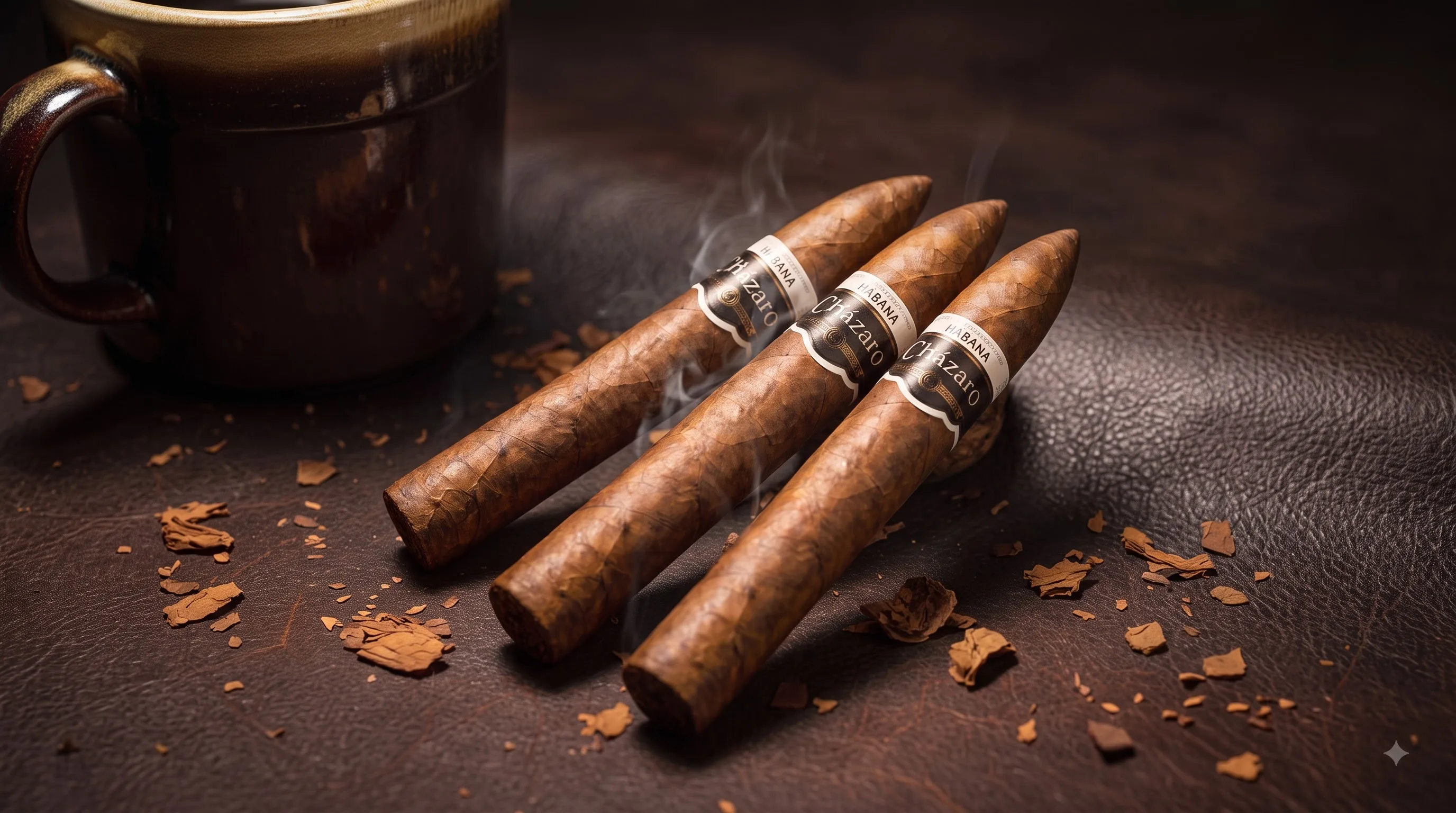
Every cigar smoker has received bad advice from someone who sounded confident. The problem with cigar culture is that confidence and accuracy do not always travel together. Some of the most widely repeated pieces of cigar wisdom are wrong, and a few of them are wrong in ways that cost you money or ruin your cigars.
Here are ten myths that deserve to be retired.
1. Darker Wrappers Mean Stronger Cigars
This is the most common cigar myth in circulation, and it survives because it sounds logical. A dark, oily, near-black Oscuro wrapper looks aggressive. A pale Connecticut Claro wrapper looks gentle. The assumption is that the visual intensity maps to nicotine intensity.
It does not. Wrapper colour is determined by the tobacco varietal, the leaf's position on the plant, the curing method, and the duration of fermentation. Extended fermentation darkens the leaf and develops richer, sweeter flavour compounds, but it also breaks down nicotine. Many Maduro and Oscuro cigars are mild to medium in strength precisely because the long fermentation that made them dark also reduced the nicotine content.
The Black Cházaro is a case in point. The San Andrés Negro wrapper is near-black, visually in the Oscuro range. The cigar is blended at 80% mild tobacco and fermented for three years. The result is a mild-to-medium smoke with coffee, vanilla, and caramel notes. If you judged it by appearance alone, you would expect a full-bodied cigar and you would be wrong.
Strength comes from the filler blend, not the wrapper colour. A pale Connecticut-wrapped cigar with a Ligero-heavy Nicaraguan filler can be significantly stronger than a dark Maduro-wrapped cigar with a mild Dominican filler. Colour tells you about flavour character, not about how much nicotine you are about to absorb.
2. You Should Roll a Cigar Near Your Ear to Check Quality
This is the myth that refuses to die. The idea is that rolling a cigar between your fingers near your ear produces a "crackle" that tells you whether the cigar is fresh, dry, or improperly stored.
The crackle tells you almost nothing useful. A cigar at proper humidity (65% to 72% RH) will produce a faint crackle. A cigar that is slightly dry will produce a louder crackle. A cigar that is very dry will produce no crackle at all because the tobacco is too brittle to flex. But you can determine all of this more reliably by gently squeezing the cigar between your thumb and forefinger: it should feel firm but slightly springy, with no hard spots or soft gaps.
More importantly, rolling a cigar aggressively near your ear risks cracking the wrapper. The wrapper is the thinnest, most delicate leaf on the cigar, held in place by natural oils and the roller's tension. Twisting it between your fingers in a shop is a good way to damage a cigar you have not yet paid for.
The ear test is theatre. The squeeze test works.
3. Cuban Cigars Are Always the Best
Cuban cigars are excellent. Cuba's Vuelta Abajo region produces some of the finest cigar tobacco on earth, and the best Cuban marques (Cohiba Behike, Trinidad Fundadores, Montecristo No. 2) are genuinely world-class.
But "Cuban" is not a synonym for "the best." Cuban cigar production is managed by Habanos S.A., a state-controlled monopoly. The advantages of this system (standardised quality, global distribution, consistent blending) come with disadvantages: limited experimentation, occasional quality control issues on high-volume vitolas, and a production system that prioritises commercial targets over per-box perfection.
Meanwhile, boutique and family-owned cigar houses in Nicaragua, the Dominican Republic, Honduras, and Mexico have been producing premium cigars that compete with and, in some cases, surpass mid-range Cuban marques on construction, complexity, and consistency. Padrón 1926 (Nicaragua), Arturo Fuente Opus X (Dominican Republic), and Cházaro (Mexico) are three examples of non-Cuban cigars that experienced smokers rank alongside the best Cubans, not below them.
The myth persists because Cuban cigars carry cultural cachet that no other origin matches. That cachet is earned, but it is not a quality guarantee on every box.
4. You Should Remove the Band Before Smoking
Some smokers insist the band must come off before the first draw. Others insist it must stay on until the burn line approaches it. Neither is a rule. It is a preference.
The practical argument for leaving the band on is that removing it too early risks tearing the wrapper. The band is attached with a small amount of vegetable-based adhesive, and if the cigar has not warmed up yet, the adhesive can pull a thin layer of wrapper leaf with it. Waiting until the burn line is within an inch or two of the band warms the adhesive enough to release cleanly.
The practical argument for removing it early is aesthetic: some smokers find the band distracting, and in certain social contexts (historically, in British cigar culture), displaying the brand was considered boastful.
There is no effect on flavour. Do whichever you prefer.
5. Storing Cigars in the Refrigerator Preserves Them
This myth has ruined more cigars in the UAE than any other. The logic seems sound: refrigerators are cool, and cool storage preserves things. But a refrigerator is one of the worst environments for a cigar.
Household refrigerators operate at approximately 3°C to 5°C and 30% to 40% RH. Cigars need 18°C to 21°C and 65% to 72% RH. The temperature is too low (it slows the ageing process to a halt and can crystallise the oils in the tobacco), and the humidity is far too low (the cigar will dry out in days). There is also the issue of odour absorption: cigars are porous, and a cigar stored next to onions, cheese, and last night's leftovers will absorb those smells and transfer them into the smoke.
The freezer is even worse. Freezing damages the cellular structure of the tobacco leaf, destroying the oils and resins that carry flavour compounds. A frozen cigar will never smoke the same way it did before freezing.
The only correct storage environment is a humidor. In Dubai, where indoor AC drops humidity to 20% to 35% RH, a humidor is not optional. The full storage guide is at /journal/how-to-store-cigars-dubai.
6. Expensive Cigars Are Always Better Than Cheap Cigars
Price reflects a combination of tobacco cost, fermentation time, labour cost, brand positioning, import duties, and retail markup. It does not reflect a linear scale of quality.
A well-made AED 35 cigar from a house that uses good tobacco, employs skilled rollers, and ferments properly can deliver a better smoking experience than a poorly stored AED 150 cigar from a famous brand. Storage is the great equaliser: a Cohiba that has been sitting in a dry, overheated shop humidor for six months will smoke worse than a fresh, properly stored cigar at a quarter of the price.
Conversely, there is a real quality threshold below roughly AED 15 to AED 20 per stick. Below that price point, the economics of hand-rolled production do not work, and you are almost certainly smoking short-filler or homogenised tobacco leaf, which limits the flavour ceiling regardless of the brand name on the band.
The sweet spot for value in the UAE market is AED 30 to AED 80 per cigar. Below that, you are paying for a compromised product. Above that, you are increasingly paying for scarcity, brand positioning, and packaging rather than proportional improvements in tobacco and construction.
7. You Should Dip Your Cigar in Cognac
This myth is romantic and destructive. The image of a gentleman dipping the foot of his cigar into a snifter of cognac before lighting is cinematic. The reality is a ruined cigar and a ruined drink.
Wetting the foot of a cigar with any liquid (cognac, whisky, port) compromises the burn. The wet tobacco does not combust evenly, which produces a harsh, bitter, acrid smoke in the first inch. The wrapper, which is held in place by dry tension and natural oils, can loosen and unravel when saturated. And the cognac itself absorbs the bitter char of the igniting tobacco, which is not a flavour any distiller intended.
If you want to pair a cigar with cognac, drink them alongside each other. The pairing guide at /journal/cigar-and-whisky-pairing covers the principle: match the weight of the drink to the weight of the cigar, alternate sips and draws, and let each enhance the other without contaminating the other.
8. Machine-Made Cigars Are Just as Good as Hand-Rolled
Machine-made cigars serve a purpose. They are consistent, affordable, and convenient. But they are not capable of producing the same smoking experience as a hand-rolled cigar, and the reason is material, not snobbery.
Machine-made cigars use homogenised tobacco leaf (ground tobacco pressed into sheets) and short filler (chopped tobacco). Hand-rolled cigars use whole-leaf tobacco and long filler (intact leaves running the full length of the cigar). The difference in material produces a difference in flavour complexity, burn temperature, smoke density, and duration.
A hand-rolled cigar with long filler burns cooler, slower, and more evenly. The intact leaf structure retains oils and moisture that produce layered flavour transitions as the cigar burns through its thirds. A machine-made cigar burns hotter and faster, with a single-note flavour profile from start to finish.
This is not to say machine-made cigars are bad. They are different. The full comparison is at /journal/hand-rolled-vs-machine-made-cigars.
9. You Need to "Season" a Cigar by Licking the Wrapper Before Lighting
No. The wrapper does not need to be moistened before smoking. This myth likely originated from the practice of wetting a cigar that had dried out slightly, in an attempt to rehydrate the wrapper enough to prevent cracking during the smoke. But a properly stored cigar at the correct humidity (65% to 72% RH) already has exactly the moisture content it needs. Adding saliva to the surface achieves nothing useful and can loosen the wrapper's adhesion.
If your cigar's wrapper is so dry that it cracks when you light it, the problem is storage, not preparation. No amount of licking will fix a cigar that has been stored at 25% RH for two weeks. Fix the humidor, not the ritual.
10. All Cigars From the Same Box Taste Identical
They taste very similar. That is the point of blending: to produce a consistent profile across an entire production run. But "very similar" is not "identical," and the differences are real.
Within a single box, minor variations in filler leaf distribution, wrapper thickness, and moisture content produce subtle differences from stick to stick. The cigar from the centre of the box (surrounded by other cigars, maintaining the most stable humidity) may smoke slightly differently from the cigar at the edge (slightly more exposed to air exchange when the box is opened).
These differences are small. Most smokers will not notice them. But if you smoke two cigars from the same box on consecutive evenings and one seems slightly creamier or slightly spicier than the other, you are not imagining it. The variation is a natural property of a handmade product. Perfect uniformity is a feature of machine production, and the cost of that uniformity is the loss of everything else that makes a hand-rolled cigar interesting.
Frequently Asked Questions
Do darker cigars have more nicotine? Not necessarily. Wrapper colour reflects the varietal, curing method, and fermentation length, not the nicotine content of the overall blend. Many dark Maduro and Oscuro cigars are mild to medium in strength because extended fermentation reduces nicotine.
Is the ear-rolling test a reliable way to check cigar quality? No. Gently squeezing the cigar between your thumb and forefinger is a more reliable check. The cigar should feel firm but slightly springy, with no hard spots or soft gaps.
Are Cuban cigars better than non-Cuban cigars? Not categorically. The best Cuban cigars are world-class, but premium non-Cuban cigars from Nicaragua, the Dominican Republic, Honduras, and Mexico compete at the same level. Quality depends on the specific cigar, not the country of origin.
Can I store cigars in the fridge? No. Refrigerators operate at 30% to 40% RH, which will dry out cigars within days. Freezing is worse: it damages the tobacco leaf structure. Use a humidor.
Should I dip my cigar in cognac? No. Wetting the foot compromises the burn, produces bitter smoke, and can loosen the wrapper. Pair your cigar and cognac by drinking them alongside each other instead.
Do all cigars in a box taste the same? Very nearly. Minor variations in leaf distribution and moisture produce subtle differences between sticks. These differences are a natural property of a handmade product and are not defects.
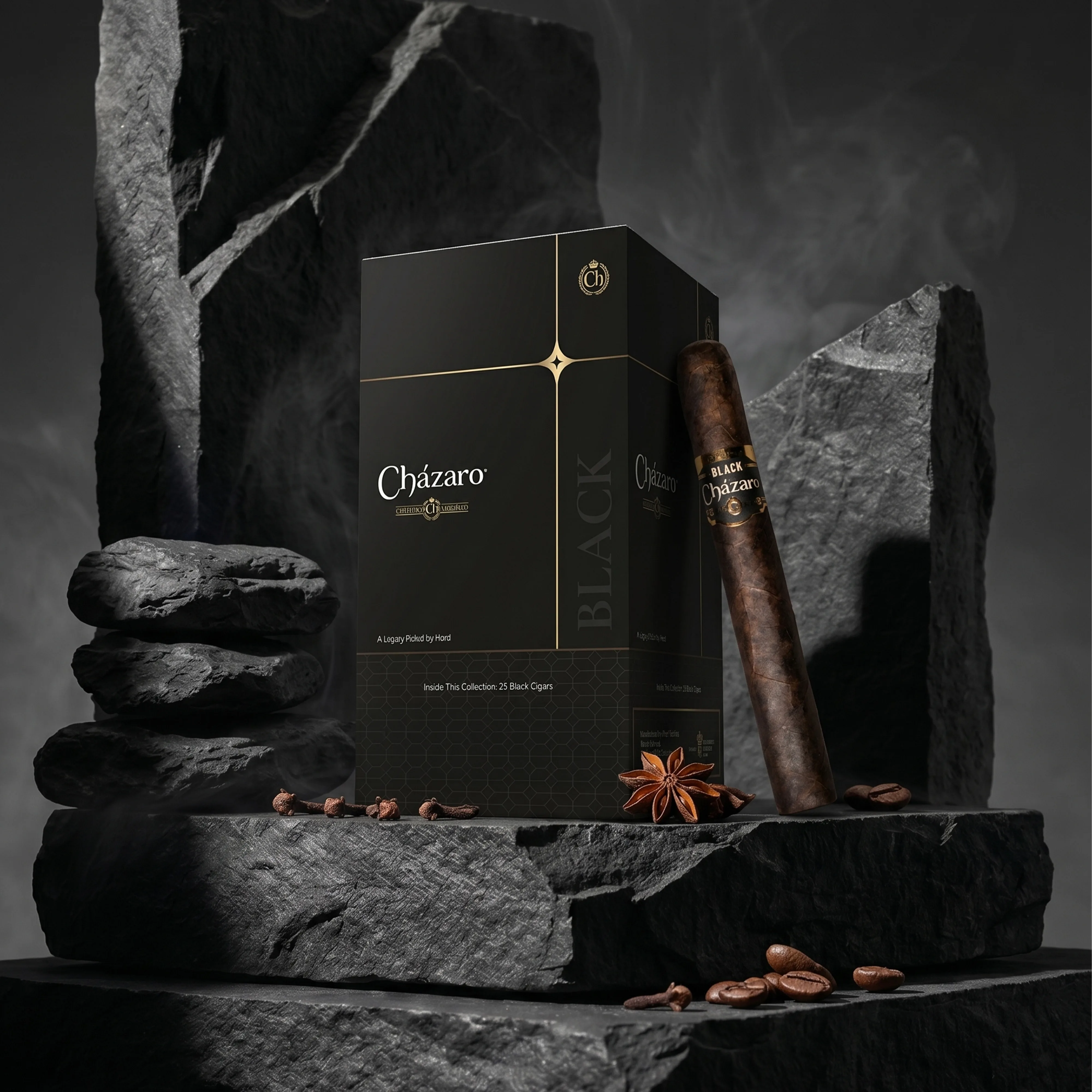 Shop the sectionChazaro BlackAED 3,750
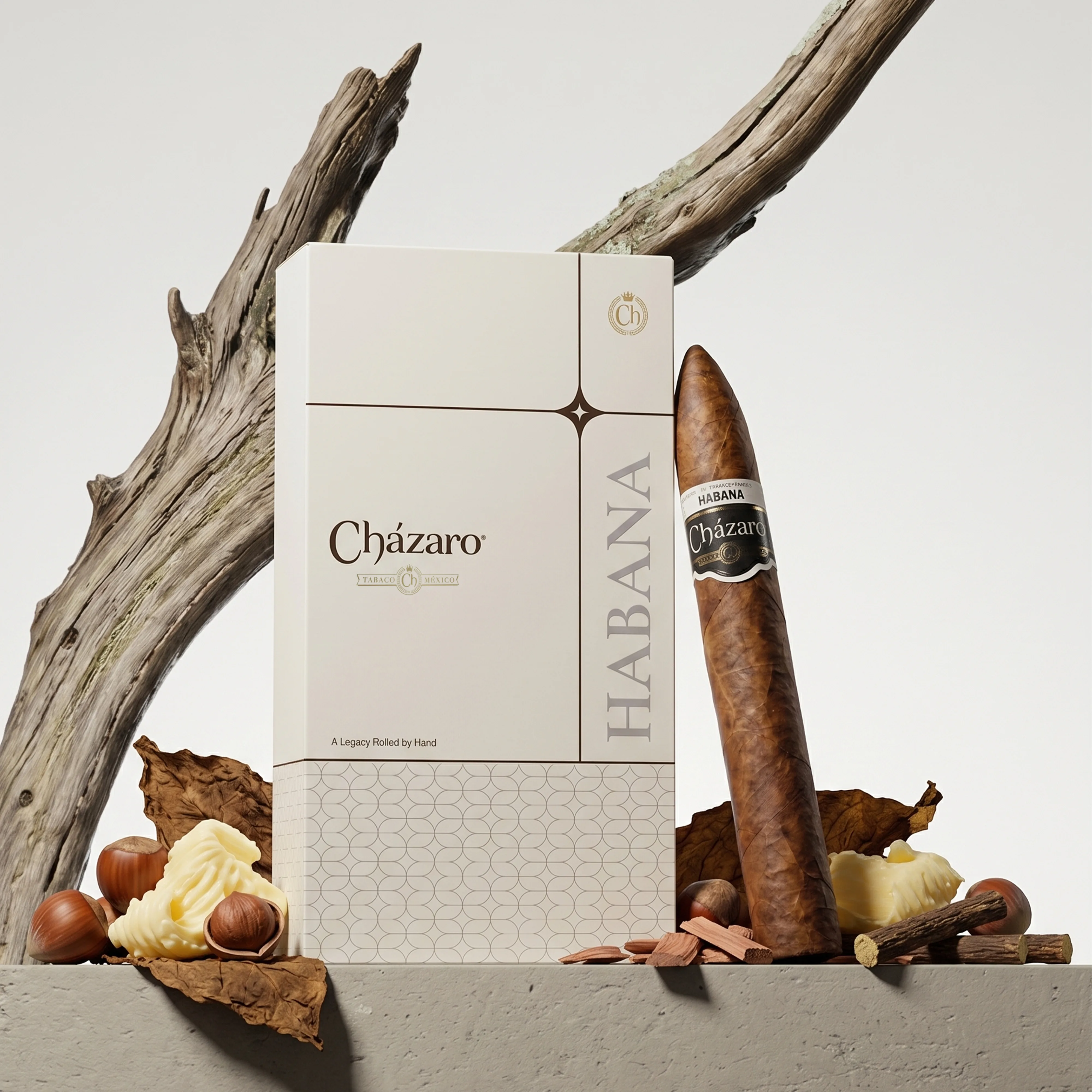 Shop the sectionChazaro HabanaAED 2,750
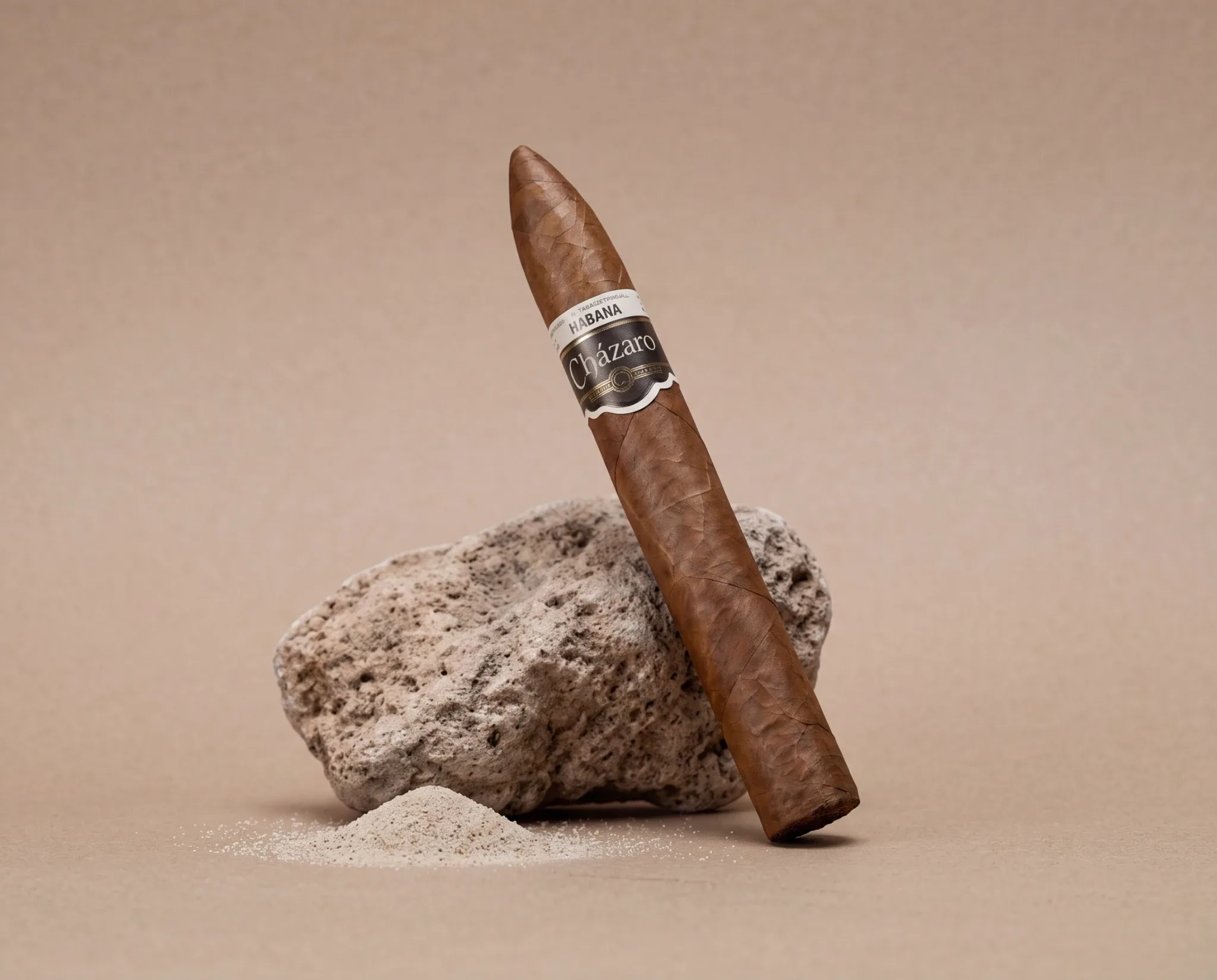 Shop the sectionChazaro Habana Hecho en MéxicoAED 130
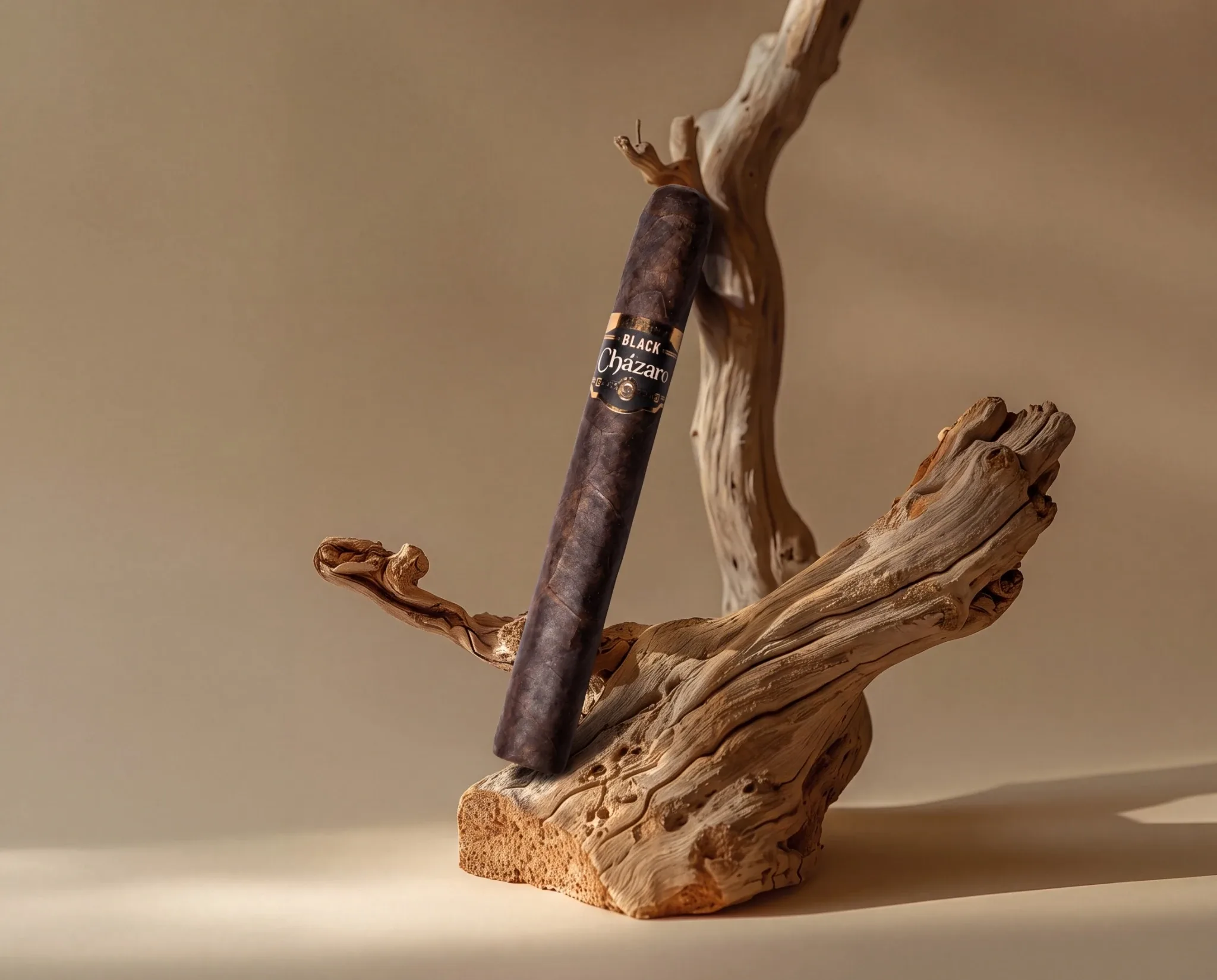 Shop the sectionChazaro Black Hecho en México<p><strong>Balanced by Design. Refined by Time. </strong><br><br>A composition of strong and mild Negro de San Andrés tobacco from San Andrés Tuxtla, Veracruz. Fermented for three years. Aged for fourteen months after rolling. The blend opens with hazelnut and leather, settles into aged cedar, and finishes clean. Medium strength. Even burn. Smooth, deliberate draw. Crafted for the smoker who does not confuse subtlety with simplicity.</p>AED 200