The debate is as old as the humidor itself. Cuban cigars carry an almost mythological status — the benchmark against which every leaf is silently measured. Yet Mexico's San Andrés Valley has been quietly producing tobacco of such startling quality that seasoned palates are rethinking assumptions. For UAE aficionados navigating a premium cigar market that has expanded significantly over the past decade, understanding both origins is not just useful — it is essential.
Side-by-Side Comparison
FactorCuban Cigars (Habanos)Mexican Cigars (San Andrés)OriginVuelta Abajo, Pinar del Río, CubaSan Andrés Tuxtla, Veracruz, MexicoSoil TypeRed clay-loam; iron-rich, volcanicDark volcanic alluvial; high organic matterCuring MethodAir-cured in royal palm barns; 45–60 daysAir-cured; longer fermentation often usedFlavour ProfileCedar, cream, subtle earth, floral top notesDark chocolate, espresso, black pepper, dried fruitPrice in UAEAED 80–900+ per stickAED 45–350 per stickAvailabilityConsistent via authorised retailersGrowing; select boutique and duty-free outlets
Origin and Terroir: Geography Is Destiny
Cuba's Vuelta Abajo region in Pinar del Río remains the gold standard of cigar tobacco geography. The vegas (farms) there benefit from a precise combination of humidity, sandy red soil and a diurnal temperature range that stresses the tobacco plant just enough to concentrate flavour compounds. The result is a leaf with a delicacy that is difficult to replicate — cedar-forward, nuanced and long-finishing.
Mexico's San Andrés Valley sits at the foothills of the Sierra de Los Tuxtlas volcanic range in Veracruz state. The soil here is something tobacconists call tierra negra — deep, dark and rich in decayed organic matter deposited over centuries of volcanic activity. Where Cuban soil produces elegant finesse, San Andrés soil produces intensity. The tobacco grown here, particularly the San Andrés Negro varietal, draws mineral complexity directly from the earth in a way that registers on the palate as a dark, almost chocolatey earthiness.
Neither is superior. They are different instruments playing different music.
Curing and Fermentation
Cuban cigars undergo a well-documented air-curing process in traditional casas de tabaco — curing barns constructed of royal palm. Leaves hang for 45 to 60 days before primary fermentation in pilones (large stacked mounds), allowing ammonia to dissipate and sweetness to develop. The process is tightly regulated under the Habanos S.A. framework.
Mexican cigar makers, freed from state standardisation, have experimented more aggressively with fermentation cycles. Many premium San Andrés rollers extend fermentation significantly — sometimes double the Cuban norm — producing a tobacco that is bolder and more immediately expressive. The trade-off: less subtlety on the cold draw, more drama on the first third.
4 Reasons San Andrés Tobacco Rivals Cuban Habanos
1. Wrapper leaf quality. San Andrés Negro wrapper — especially from estate producers like Rancho Chazaro — is widely regarded as among the finest dark wrapper leaf grown anywhere. Its oiliness, tensile strength and burn characteristics rival Cameroon and Connecticut broadleaf.
2. Consistency of construction. Where genuine Cuban cigars occasionally suffer from quality-control variation (a documented issue even among aficionados who love them), premium Mexican cigars from small-batch producers demonstrate a tighter, more uniform roll. In the UAE market, where authenticity verification is always a concern, this matters.
3. Price-to-complexity ratio. A San Andrés premium cigar in the AED 90–180 range reliably delivers complexity that would cost AED 300+ in a comparable Habano. For UAE smokers building a rotation rather than a collection, this is a material advantage.
4. Age-friendliness. San Andrés tobacco responds exceptionally well to ageing in cedar-lined humidors. At two to four years, the pepper notes soften and the chocolate deepens into something resembling a fine aged rum. Cuban cigars age beautifully too, but require more patience — often five to eight years minimum for the same transformation.
Tasting Notes: Chazaro vs Cohiba and Montecristo
Rancho Chazaro (Mexican, San Andrés)
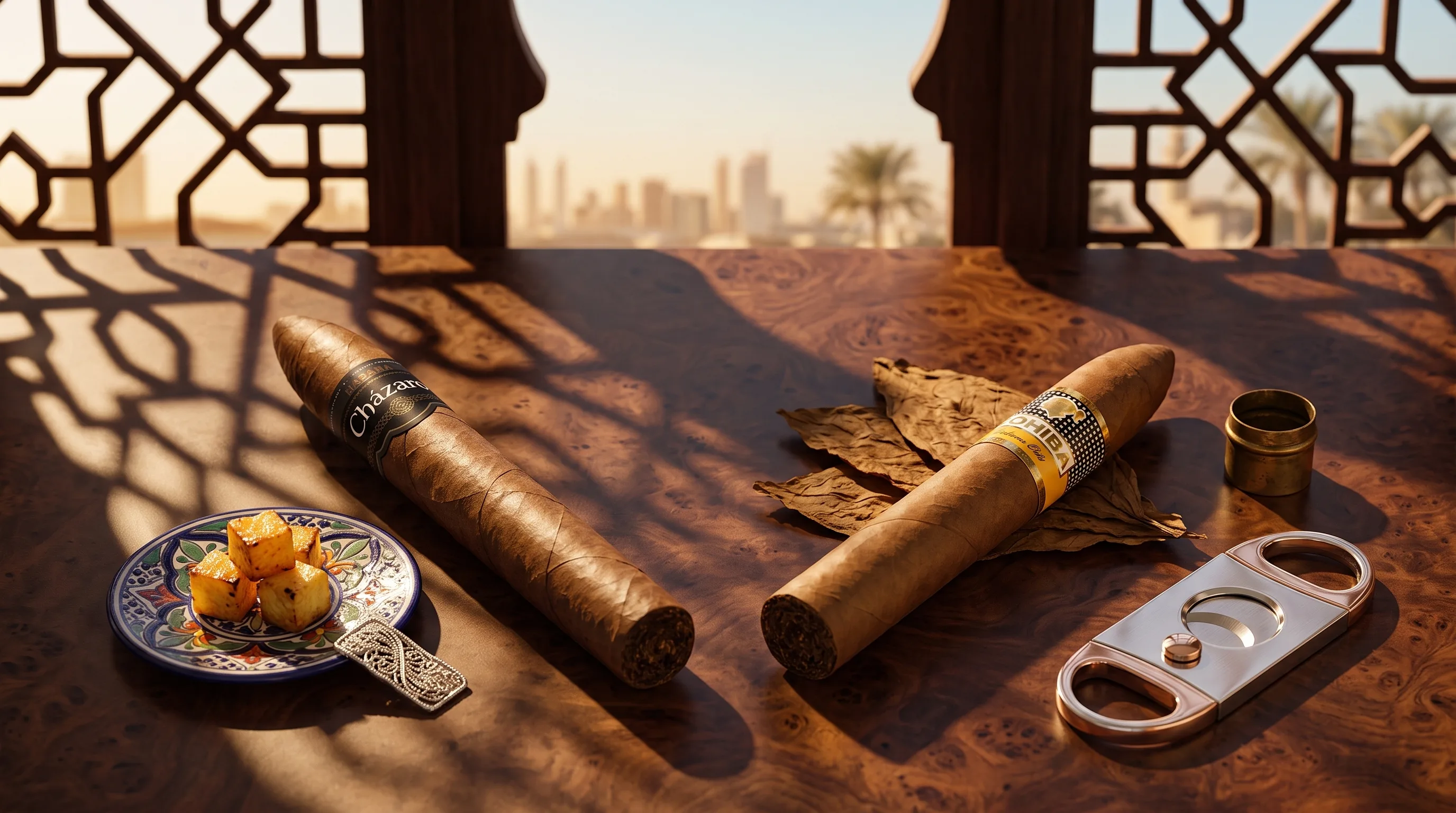
A boutique Veracruz producer that has developed a following among discerning UAE buyers. The house style runs toward full-bodied construction. Expect on the first third: dark espresso, unsweetened cocoa and a bold black pepper finish. Mid-third: the pepper retreats and dried fig, cured leather and a faint mineral quality emerge. Final third: the retrohale opens into cedar and sweet tobacco that lingers for several minutes. Strength: medium-full to full.
Cohiba Siglo IV (Cuban, Habanos S.A.)
The benchmark premium Cuban. First third: cream, toasted cedar, faint white pepper. Mid-third: roasted coffee and subtle floral notes — jasmine is sometimes detected. Final third: a complex interplay of nuttiness and hay with a long, clean finish. Strength: medium. The experience is precision over power.
Montecristo No. 2 (Cuban, Habanos S.A.)
Arguably the most recognised Cuban shape worldwide. First third: earthy with café con leche sweetness. Mid-third: complexity builds — cocoa, leather and subtle citrus. Final third: deep, rich and warm with a creamy retrohale. Strength: medium to medium-full. An exceptional all-day cigar.
The key distinction: Chazaro and similar San Andrés cigars reward smokers who prefer visceral, full-flavoured experiences. Cohiba and Montecristo reward patience and attention to subtlety. Neither should be smoked in a rush.
Verdict
For UAE aficionados, the honest answer is this: if you can source a genuine, properly-humidified Habano at a fair price, it remains one of tobacco's great pleasures. But the qualification in that sentence — genuine and properly-humidified — carries significant weight in a market where counterfeits exist and storage conditions vary.
Mexican cigars from San Andrés, particularly from producers like Rancho Chazaro, arrive with fewer question marks and deliver measurable complexity at every price point. They are not consolation prizes. They are a different category of excellence.
The sophisticated UAE palate is well-served by rotating between both origins — Habanos for occasions demanding ceremony and refinement, San Andrés for evenings when you want your cigar to make a statement.
FAQ
Are Mexican cigars as good as Cuban cigars?
Premium Mexican cigars from San Andrés Tuxtla — particularly dark-wrapped varietals — rival Cuban Habanos in complexity and construction quality. They offer bolder, fuller flavour profiles at lower price points. They differ in style rather than quality: Cubans favour elegance and subtlety; San Andrés excels in intensity and earthiness.
What tobacco grows in San Andrés Mexico?
San Andrés Tuxtla in Veracruz grows San Andrés Negro, a dark, oil-rich tobacco varietal prized worldwide as a premium wrapper leaf. The volcanic alluvial soil produces leaves with exceptional tensile strength, slow burn characteristics, and a distinctive flavour profile of dark chocolate, espresso, dried fruit and black pepper.
If you're building or refining a humidor collection in the UAE and would like guidance on sourcing verified premium cigars from both origins, reach out to a specialist tobacconist who carries documented provenance on their stock. The difference between a well-sourced cigar and a poorly-stored one is the difference between the experience described above and disappointment.